
Background
Objectives:
Changes in orthodontic devices and how they are distributed to patients have created competition in the marketplace of orthodontic services. This study was undertaken to analyze the factors influencing patients’ advertising preferences when they are selecting an orthodontic treatment provider.
Methods
A 2-part questionnaire was distributed to residents of a midwestern Canadian city in the form of physical copies and through an online survey platform. The first part of the survey focused on determining which types of marketing patients found to be most trustworthy, whereas the second part explored the aspects of advertising materials that were considered important by patients when choosing a provider for orthodontic treatment. Participants’ age, gender and orthodontic experience, as well as the recruitment source for survey participation, were analyzed as potential contributing factors.
Results:
A total of 290 participants responded. Word of mouth, online reviews and official websites of orthodontic practices were the most popular types of marketing. Social media were more popular among younger people, whereas participants recruited from local dental clinics were the least interested in interviews or articles from a newspaper, magazine or community newsletter. Participants recruited from dental clinics or a university orthodontic clinic were not interested in services offered by direct-to-consumer companies. When asked to select the types of information they considered relevant, participants frequently cited before-and-after photographs, flexible payment arrangements, provision of repairs/adjustments at no cost, the option of evening or weekend appointments, the clinician’s experience and whether the clinician was knowledgeable about the latest technologies.
Conclusions:
Consumers’ preferences varied according to different demographic parameters. Although the findings suggest a shift away from some traditional modalities of advertisement, word of mouth and clinicians’ expertise remained important to survey participants.
Keywords:
orthodontics, advertising, consumer preferences
Introduction
In 1997, the introduction of modern aligner therapy disrupted referral dynamics in the field of orthodontics due to its convenience and ease of application.1 Since then, clear aligner therapy has become more effective for treating moderate to complex malocclusions through technological advances and the use of elastics, attachments, staged interproximal reduction and staged tooth movements.1 General dentists are now adopting a greater role in their patients’ orthodontic treatment decisions, which often leads these clinicians to provide the prescribed care themselves rather than referring patients to orthodontic specialists.2 This trend, along with the recent emergence of mail order distribution of direct-to-consumer (DTC) aligners, has led to stronger competition and the need for a strategic shift in advertising.2,3 Instead of traditional advertising methods, new market strategies and direct patient education, also known as DTC advertising, have gained increased relevance.1
In this context, it has become necessary to better understand the different types of marketing approaches that patients now value and rely upon. Studies investigating such preferences have been published,4-9 but important details have been lacking.10 Most of what is known about this topic derives from the orthodontic literature. One previous study investigated the relationship between patient demographic characteristics and perceptions of DTC orthodontics,2 but it did not evaluate advertising modalities. Another study investigated the factors influencing selection of an orthodontist, as well as perceptions of different forms of advertising, such as radio, television, newspaper, and magazine ads, as well as direct mail and billboards, but it did not assess the effect of social media, which are prevalent in modern society.4 Even when the effect of social media has been studied,5 it has not been compared with more traditional modalities of advertising.
Notably, all of these previous studies were conducted in the United States; none involved a Canadian sample. Therefore, it would be useful for Canadian dental professionals to have access to information about demographic characteristics and associated advertising preferences of Canadian patients to better guide marketing decisions and thus avoid wasting time and money on inefficient publicity.
In this study, we investigated consumers’ preferences for various marketing strategies, taking into account demographic characteristics such as age, gender, source of recruitment, and history of orthodontic treatment. We also aimed to understand the types of information that prospective patients find relevant in orthodontic advertising. The null hypothesis was that orthodontic consumers, regardless of demographic characteristics, valued neither a specific modality of advertising nor defined content or information when selecting a provider.
Methods
The study was approved by the Bannatyne Campus Research Ethics Board of the University of Manitoba (H2019:324 [HS23116]). When the study was initiated (late 2019), the city of Winnipeg, Manitoba, was reported to have a population of 808 419.11 The survey’s target sample size was calculated to be between 97 and 384, considering a 95% confidence level and a margin of error ranging from 5% to 10%, respectively. With a power of 0.80, goodness-of-fit testing, 0.05 level of significance and a medium effect (W) of 0.3 for 5 categories, the required sample size was estimated to be 133.
A 2-part questionnaire was offered to residents of Winnipeg in the form of physical copies distributed at the University of Manitoba orthodontic clinic. In addition, a standardized email message was sent to most general and orthodontic practices in the city, containing a cover letter, the consent form, the questionnaire and an Instagram (Meta, Menlo Park, CA) link leading to the SurveyMonkey platform (SurveyMonkey Inc., San Mateo, CA), for distribution to patients. Phone calls were also made to the largest practices to encourage participation from areas across the city. The questionnaire was developed by an orthodontist (F.P.) with 20 years of experience and an undergraduate dental student (A. D.) who was a long-term resident of the city. They worked to ensure that all aspects of interest were fully covered by the survey questions (content validity). The questionnaire’s content was further revised on the basis of input from 10 laypersons not involved with the study, who were asked to identify unclear questions. Given the inherent difficulty of recruiting volunteers to respond to a questionnaire, we were unable to ask individual volunteers to complete the questionnaire more than once (to investigate test–retest reliability).
The first part of the questionnaire focused on determining which marketing modalities patients found to be most trustworthy. The second part explored which aspects of a practice and its practitioner included in advertising were considered relevant when selecting an orthodontic service provider. At the time of the study, the legal age to provide consent in the province of Manitoba was 16 years; parents or guardians were allowed to respond on behalf of participants younger than 16 years. Personal identifiers were optional and were limited to postal code, birthdate and biological sex. Each participant was categorized (by self or by parent/guardian) as a previous, current or prospective orthodontic patient. Clarification of questions was not available to participants, and there was no time limit for completing the questionnaire.
The study was conducted over the course of 15 months, from September 2019 to November 2020. The community area subdivisions were those officially demarcated by the city of Winnipeg, and the distribution of the median household income (according to participants’ postal codes) was based on official information provided in 2019 by Statistics Canada.11
The Pearson χ2 test was used to compare participants' preferences for modality of advertisements within each demographic group. All analyses were performed with SPSS Statistics for Windows software (version 28.0, 2021; IBM Corporation, Armonk NY), and results were considered significant if p ≤ 0.05.
Results
A total of 290 participants completed the questionnaire: 54 from the university orthodontic clinic, 73 from general dentistry clinics proportionally representing the city’s subdivisions and 163 from online recruitment, corresponding to a margin of error of 5.8%. The distribution of participants across the city’s subdivisions is shown in Figure 1. Of the local orthodontic clinics that were contacted directly, all declined to participate in study recruitment. The mean neighbourhood income was $44 550 (range $29 068 to $55 594). Of the 290 participants, 180 identified as female, 108 identified as male, and 2 chose not to disclose their gender, making them ineligible for the gender distribution assessment. Similarly, 2 participants chose not to provide their age and therefore could not be categorized into an age group. Of the 232 participants who disclosed their orthodontic history, 40 were currently receiving orthodontic treatment, 120 had already received such treatment, and 72 were considering treatment in the future.
The types of advertising most frequently cited as trustworthy were word of mouth, online reviews, official clinic websites and ads from certified orthodontists (Figure 2). Preference for advertising through clinics’ social media accounts varied significantly by age (p < 0.001), with those 50–59 years old showing no interest, and those 16‑19 years old showing strong interest (56.5%) (Table 1 and Table 2). Participants recruited from local general dentistry clinics were the least interested in interviews or articles from a newspaper, magazine or community newsletter (p = 0.028) (Table 3).
In terms of advertising information that participants considered relevant when selecting an orthodontic provider, the following were mentioned most frequently: before-and-after photographs, the doctor’s experience, whether the doctor was knowledgeable about the latest technologies and scientific research, the availability of repairs/adjustment at no extra cost, the option of evening or weekend appointments, and flexible payment options (Figure 3; Tables 4, 5 and 6). The preference for advertising to provide information about flexible payment plans and lower treatment costs was significantly higher among female participants than among male participants (42.9% vs 35.0%; p = 0.005) (Table 7). The preference for the convenience of online bookings and no-charge cancellations, as highlighted in advertising, was significantly higher among potential orthodontic patients than among those previously or currently receiving treatment (p = 0.016; Table 8). None of the participants recruited from dental clinics or the university orthodontic clinic were interested in services offered by do-it-yourself (DIY) or direct-to-consumer (DTC) orthodontic companies (p = 0.038; Table 4).
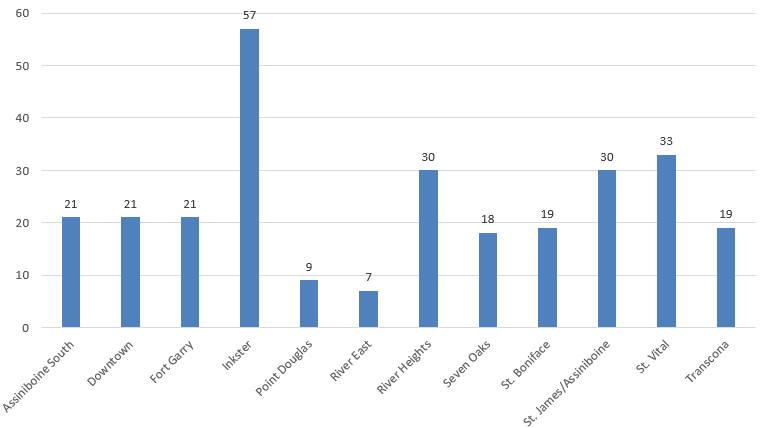
Figure 1: Geographic distribution of the number of participants within the subdivisions of the city of Winnipeg, Manitoba.
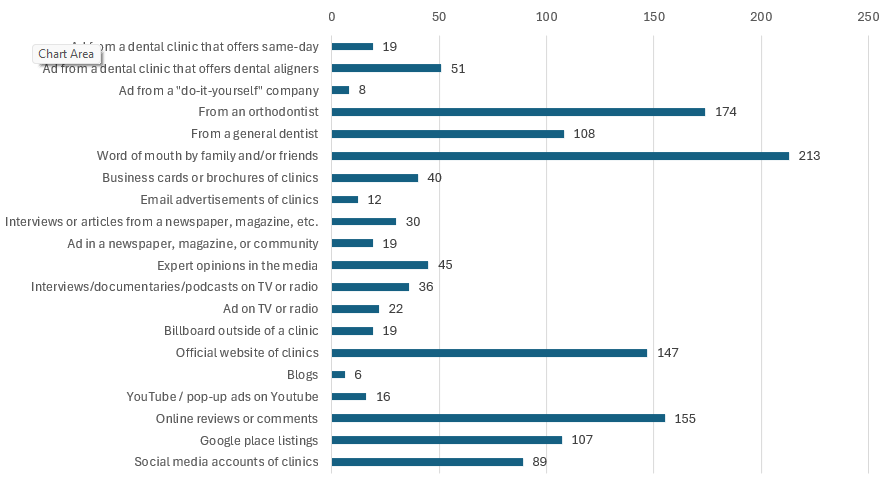
Figure 2: Distribution of preferences for types of advertisement when selecting an orthodontic treatment provider.
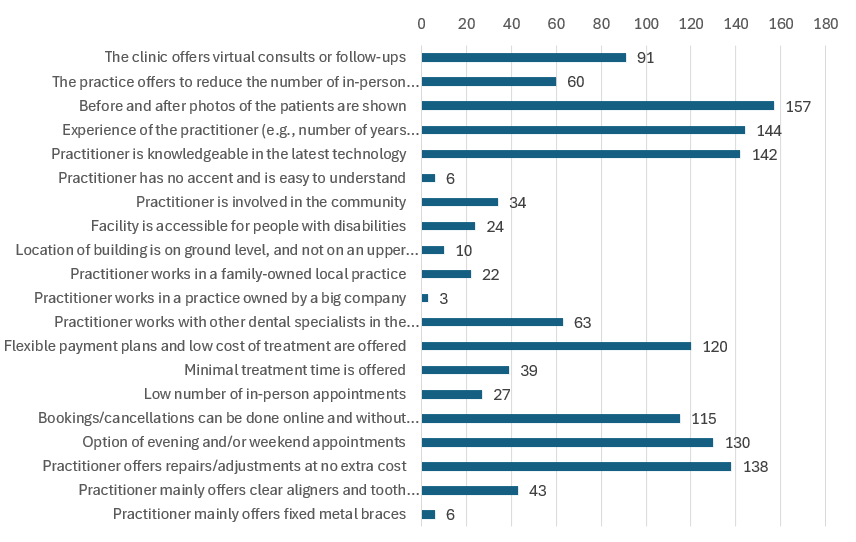
Figure 3: Distribution of relevance attributed to advertising content when selecting an orthodontic treatment provider.
Discussion
The purpose of this study was to investigate consumers’ preferences for different advertising modalities, specifically the modalities they found to be trustworthy when selecting an orthodontic treatment provider. The study also investigated the types of information or content that consumers valued the most in advertising materials. Based on statistically significant differences and the distribution of responses, we rejected the null hypothesis of no preference for a particular modality or specific content when selecting an orthodontic service provider.
The results from our study demonstrated several trends that are worth mentioning. For example, the youngest age group (16‑19 years) perceived clinics’ social media as a trustworthy source to a much greater extent than the oldest age group (50‑59 years). This may reflect the fact that parents of teenagers tend to be young people who rely more on social media when looking for a service relative to older generations.
Patients attending local general dentistry clinics showed lower interest in interviews or articles from a newspaper, magazine or community newsletter, which corroborates the theory that as technology evolves and becomes a significant component of our daily lives, written resources tend to become outdated. As a result, providers should consider modalities of advertisement that are immediately accessible and convenient, like online vehicles.
As convenient as same-day service may sound, participants did not demonstrate much enthusiasm for advertisements mentioning “same-day braces” or “same-day aligners.” This suggests that either further investigation is needed or that these participants might have anticipated feeling under pressure to decide in a same-day context.
Our results confirmed the common belief that patients appreciate low cost and ready availability of appointments for repairs and emergencies. However, female participants were more frequently interested in flexible payments than male participants, possibly because they were single mothers or had a lower income, among other potential factors. To our knowledge, this finding has not been observed in previous studies.
An unexpected finding was that participants did not prefer advertising that mentioned a clinician’s involvement in community services. Information about a clinician’s foreign accent was also not perceived as important in the context of advertising, which may reflect the multicultural city where the study was conducted.
Information about Canadian patients’ preferences for types and content of advertising has been lacking in the dental literature. The findings of this study showed, among other things, that participants substantially rely on online reviews and clinics’ official websites. Knowing these preferences can help clinicians to avoid wasting time and resources on advertising modalities of lesser interest to consumers. In practical terms, preferences for online reviews and clinic websites indicate the importance of providing a positive experience for every patient and ensuring that the clinic’s official website is both well designed and effective at targeting the desired patient base. It was surprising that YouTube videos and YouTube advertisement pop-ups (Google, Mountain View, CA) were not popular among survey participants, whereas word of mouth continued to play an important role, stressing the importance of delivering good results and communicating well with patients and their families. This result coincided with the findings of a similar survey involving patients in 8 orthodontic practices in the United States (n = 655 responses), in which respondents most often cited other patients’ referrals as the modality by which they learned of their orthodontic provider (50% to 57%).4 Despite the paradigm shift in marketing strategies, this showed that some old methods of developing a patient database are still powerful. As in 2 previous studies,9,12 ours confirmed the perception of advertisements from certified orthodontists as being trustworthy, possibly reflecting higher expectations for this type of treatment. Besides valuing before-and-after photographs, participants found it important for advertising to highlight the clinician’s experience and knowledge of the latest technologies and scientific research. This suggests that providers should incorporate such information when designing advertising strategies.
All participants were residents of Winnipeg, a city located in the geographic centre of North America. Participants were asked to disclose their postal code, which allowed us to determine not only their residential area, but also the estimated median household income. Although this type of stratifying variable would be worth assessing, our sample size was insufficient for such an analysis, because there was limited income variation across the city’s subdivisions. Future studies are encouraged to investigate the influence of income on consumer preferences for orthodontic advertising. Oral health literacy is usually associated with higher income, as was demonstrated by a cross-sectional survey administered to a stratified random sample of patients from 2 rural communities in Wisconsin.13 It is also important to consider variables such as consumers’ convenience, their time constraints and whether the study population has easy access to dental professionals.
The COVID-19 pandemic may have shaped how people react to the mention of virtual interaction possibilities in advertisements, and the pandemic has led to telemedicine becoming a more prevalent modality of health care, whenever ethics and good practice allow.14 In our survey, many participants perceived the availability of virtual consults and follow-ups as valuable information to include in advertising.
Advertising information about evening and weekend appointments was also in high demand. This points to the importance of considering different schedule options, preferably not interfering with school hours and parents’ work time.
Most of the participants in our study had already received or were receiving orthodontic treatment. Although the weight of their word-of-mouth recommendations can be assumed, both the experience and level of exposure to orthodontics did not seem to make any difference in the way advertisements were perceived. Perhaps participants’ beliefs and values were consolidated early, before exposure to orthodontic treatment.
Caution should be exercised in extrapolating these results to large metropolitan or rural areas or to the national level. As with any measurement or survey tool, a questionnaire like ours cannot cover all aspects of a topic, because response frequency typically declines with increasing robustness of the tool. Adaptation to the local reality is therefore recommended.
Two limitations were the imperfect representation of each region of the city, which limits the results to individuals who responded to the questionnaire, and the lack of participation of local orthodontic clinics in participant recruitment, which probably reflects the low number of such clinics and the overwhelming demand on them during the COVID-19 pandemic, when this study was conducted. However, we did not consider the latter limitation to have substantially affected our results because the study focused on the preferences of patients, not clinicians, and also because the survey could be accessed online by patients or prospective patients of all clinical settings, including orthodontic practices.
Despite the questionnaire being perceived as simple in its wording and quick to complete, some patients chose not to provide information such as gender, age and details about their previous orthodontic experience. The inclusion of additional options such as “neutral” or a blank field could have allowed for a broader range of gender responses. However, given that responses were missing for 20% or less of the sample for each of these 3 variables, the impact of missing data was probably low. Although our findings can serve as a stepping stone toward improved marketing strategies, they must be interpreted with caution due to local preferences, the COVID-19 context and a few design limitations. Future research in this area would benefit from nationwide sample recruitment, with representation from all provinces/territories or regions.
Conclusion
Consumers’ preferences varied according to certain parameters such as age and gender, which indicates that orthodontic practitioners must use a customized approach to attract specific patients. The consumers who participated in this study reported that word of mouth, a clinic’s official website and social media accounts, and online reviews were most trustworthy when seeking orthodontic treatment. In terms of the advertising content that was valued, participants appreciated information about providers’ experience and knowledge of the latest technologies and scientific research, before-and-after photographs of cases, and details about the availability of flexible payment options and of repairs/adjustments at no extra cost.
THE AUTHORS
 |
Dr. Dhawan is an undergraduate student in the Gerald Niznick college of dentistry, University of Manitoba, Winnipeg, Manitoba. |
 |
Dr. Fiuza is senior instructor in the department of restorative dentistry, division of prosthodontics, Gerald Niznick college of dentistry, University of Manitoba, Winnipeg, Manitoba. |
 |
Dr. Bittencourt Santos is assistant professor in the department of othodontics and pediatric dentistry, Federal University of Rio Grande do Norte, Natal, Brazil. |
 |
Dr. Pinheiro is associate professor in the department of preventive dental sciences, division of orthodontics, Faculty of Dentistry, University of Manitoba, Winnipeg, Manitoba. |
Corresponding author: Dr. Fabio Pinheiro, associate professor, department of preventive dental sciences, division of orthodontics, Faculty of Dentistry, University of Manitoba, Winnipeg, Manitoba.
The authors have no declared financial interests.
This article has been peer reviewed.
Acknowledgements
The authors express their gratitude and appreciation to the volunteer participants, the practices that agreed to collaborate and the graduate orthodontic clinic at the University of Manitoba.
References
- Rossini G, Parrini S, Castroflorio T, Deregibus A, Debernardi CL. Efficacy of clear aligners in controlling orthodontic tooth movement: A systematic review. Angle Orthod. 2015;85(5):881-9. doi: 10.2319/061614-436.1
- Okuda BC, Tabbaa S, Edmonds M, Toubouti Y, Saltaji H. Direct to consumer orthodontics: Exploring patient demographic trends and preferences. Am J Orthod Dentofacial Orthop. 2021;159(2):210-216.e2. doi: 10.1016/j.ajodo.2019.12.024
- Brown M, Wiltshire W, de Sa Leitao Pinheiro FH, Schonwetter DJ. Orthodontists’ perceptions of and adaptations to nonspecialist and direct-to-consumer orthodontic service providers. Angle Orthod. 2022;92(4):446-62. doi: 10.2319/070421-533.1
- Edwards DT, Shroff B, Lindauer SJ, Fowler CE, Tufekci E. Media advertising effects on consumer perception of orthodontic treatment quality. Angle Orthod. 2008;78(5):771-7. doi: 10.2319/083106-357.1
- Nelson KL, Shroff B, Best AM, Lindauer SJ. Orthodontic marketing through social media networks: The patient and practitioner’s perspective. Angle Orthod. 2015;85(6):1035-41. doi: 10.2319/110714-797.1
- Chambers DW, Zitterkopf JG. How people make decisions about whether or not to seek orthodontic care: Upstream in the treatment chain. Am J Orthod Dentofacial Orthop. 2019;155(6):826-31. doi: 10.1016/j.ajodo.2018.07.019
- Geoghegan F, Birjandi AA, Machado Xavier G, DiBiase AT. Motivation, expectations and understanding of patients and their parents seeking orthodontic treatment in specialist practice. J Orthod. 2019;46(1):46-50. doi: 10.1177/1465312518820330
- Tuncer C, Canigur Bavbek N, Balos Tuncer B, Ayhan Bani A, Celik B. How do patients and parents decide for orthodontic treatment–effects of malocclusion, personal expectations, education and media. J Clin Pediatr Dent. 2015;39(4):392-9. doi: 10.17796/1053-4628-39.4.392
- Olson JC, Shroff B, Carrico C, Boyle J, Lindauer SJ. Comparison of patient factors influencing the selection of an orthodontist, general dentist, or direct-to-consumer aligners. Am J Orthod Dentofacial Orthop. 2020;157(4):526-532.e2. doi: 10.1016/j.ajodo.2019.11.010
- Oppenhuizen G. Management service organizations in orthodontics: A paradigm shift? Am J Orthod Dentofacial Orthop. 1997;112(3):345-7. doi: 10.1016/S0889-5406(97)70120-3
- Cui Y, Zinnick S, Henderson A, Dunne L. Winnipeg Health Region community health assessment 2019. Winnipeg (MB): Evaluation Platform, Centre for Healthcare Innovation & Winnipeg Regional Health Authority; 2019. Available: https://wrha.mb.ca/files/cha-2019-full-report.pdf (accessed 2019/07/06).
- Brown M, Wiltshire W, de Sa Leitao Pinheiro FH, Schonwetter DJ. Adult patient preference for an orthodontic care provider in Canada. Am J Orthod Dentofacial Orthop. 2022;162(4):477-482.e5. doi: 10.1016/j.ajodo.2021.04.035
- VanWormer JJ, Tambe SR, Acharya A. Oral health literacy and outcomes in rural Wisconsin adults. J Rural Health. 2019;35(1):12-21. doi: 10.1111/jrh.12337
- Bashshur R, Doarn CR, Frenk JM, Kvedar JC, Woolliscroft JO. Telemedicine and the COVID-19 pandemic, lessons for the future. Telemed J E Health. 2020;26(5):571-3. doi: 10.1089/tmj.2020.29040.rb