
Abstract
Background:
Many dental schools offer qualifying dental programs to internationally trained dentists (ITDs) to help them meet the standards of dental care expected in the host country. The literature on this topic has not yet been comprehensively summarized. This scoping review aimed to summarize the available literature on ITDs enrolled in qualifying dental programs.
Methods
This study was guided by a previously established framework for scoping reviews (Arksey and O’Malley’s framework). No restrictions were set on the time period or study design of included studies. Five databases (PubMed, Web of Science [Core Collection], Scopus, ProQuest and ERIC) were searched for relevant studies. The reference lists of selected papers were checked to complement the database search. Two reviewers independently screened eligible papers and extracted the relevant data.
Results:
Fifteen papers (2 reviews and 13 primary research studies) met the inclusion criteria. Fourteen of the studies were conducted in the United States and one in Canada. Thirteen of the primary research studies used quantitative approaches, and the remaining study used a qualitative approach. Three studies focused on characteristics of the program (e.g., duration, type, admission requirements) and the students, 9 assessed the performance (predictive, comparative and perceived) of ITDs, and 3 described challenges faced by ITDs. Most of the programs were at the undergraduate level with a duration of 2 years, and the ITDs were mainly from India. The most significant academic and clinical performance predictors were scores on English-language testing and the National Board Dental Examination I. The challenges encompassed cultural disparities, language barriers, financial constraints and immigration-related issues.
Conclusions:
Although the literature on ITDs in qualifying dental programs is growing and covers several topics, more evidence is needed to describe further and understand ITDs’ performance and experiences in these programs.
Introduction
Developed countries such as Canada and the United States can benefit from internationally trained dentists (ITDs) who have been educated in nonaccredited dental schools and wish to become licensed dentists in the host country.1 In addition to addressing current and anticipated shortages of dental care providers, these professionals could meet current demands for dental services and diversify the dental workforce, which may improve access to dental services, especially among ethnic minority groups.2
To become a general dentist in Canada or the United States, ITDs who have completed a program that is not recognized by the pertinent regulatory authority (i.e., a nonaccredited program) can obtain dental licensure through one of several processes.3 In Canada, 2 pathways are available. One pathway involves passing 2 examinations administered by the National Dental Examining Board of Canada (NDEB), after which ITDs become eligible for the NDEB certification process.4 The other pathway involves completing a qualifying program in an academic dental institution.5 Similarly, ITDs in the United States are required to pass the Integrated National Board Dental Examination and then complete a degree from a dental program accredited by the Commission on Dental Accreditation from the American Dental Association (ADA) to obtain dental licensure.6 In addition to facilitating the dental licensure process, dental qualifying programs have been established to ensure that ITDs meet the existing standards of competence for dentistry in the host country.7 Currently, 8 dental schools in Canada8 and 42 dental schools in the United States9 offer dental qualifying programs.
In recent years, numerous studies have attempted to characterize ITDs enrolled in qualifying programs and their participation in the dental workforce upon licensure.10-12 Previous reviews have described specific challenges faced by ITDs in these programs,13,14 but a systematic summary of research activity on this topic has been lacking. This scoping review aimed to summarize the available literature on ITDs involved in dental qualifying programs.
Methods
This scoping review, conducted according to the framework developed by Arksey and O’Malley,4 had 5 main stages: framing the research question; identifying relevant studies; selecting studies for inclusion, charting or plotting the data; and collating, summarizing and reporting the results. The Preferred Reporting Items for Systematic Reviews and Meta-Analyses extension for Scoping Reviews (PRISMA-ScR) guidelines were followed to improve the transparency of the review process.15
We chose to conduct a scoping review, rather than a systematic review, in light of the need to identify and summarize the available evidence, without assessing a specific clinical question that would guide a particular decision-making process.15
Framing the research question
The review sought to answer the following questions:
- What were the characteristics of studies of ITDs who participate in dental qualifying programs?
- What were the areas that these studies investigated?
- What were the main results of these studies?
Identifying relevant studies
In consultation with a health sciences university librarian, we developed a robust search strategy to identify the relevant literature (Table 1). The databases searched were PubMed, Web of Science (Core Collection), Scopus, ProQuest and ERIC up to December 2024. The inclusion criteria specified original research and review studies published in English that reported on the characteristics of or main results achieved by ITDs in dental qualifying programs. Studies published in other languages, as well as commentaries, editorials, perspective papers and conference abstracts, were excluded. The inclusion and exclusion criteria are summarized in Table 2.
|
Database |
Search terms |
|---|---|
| PubMed | (((((foreign-trained dent*) OR (international-trained dent*)) OR (internationally-trained dent*)) AND (dental program)) OR (dental degree completion) |
| Scopus | TITLE-ABS-KEY ("foreign-trained dent*") OR ( "international-trained dent*" ) OR ( "internationally-trained dent*" ) AND ( "dental program*" ) OR ( "dental degree completion" ) |
| Web of Science | "foreign-trained dent*" or "international-trained dent*" or "internationally-trained dent*" (Topic) and "dental program*" or "dental degree completion" (Topic) |
| ProQuest | ("foreign-trained dent*") OR ("international-trained dent*") OR ("internationally-trained dent*") OR ("foreign-trained dental student*") OR ("international*-trained dental student*") AND ("dental program*") OR ("dental degree completion") |
| ERIC | (dental program OR dental degree completion) AND (foreign dentist OR international-trained dentist OR internationally-trained dentist) |
|
Aspect of study |
Inclusion criteria |
Exclusion criteria |
|---|---|---|
| Language | English | Non-English |
| Study focus | Internationally trained dentists enrolled in dental qualifying programs | All other internationally trained dentists not enrolled in dental qualifying programs |
| Type of article | Original research, reviews | Commentaries, conference abstracts |
| Ethics clearance | Studies with ethics approval | Studies without ethics approval |
| Population and sample | Internationally trained dentists in recognized dental qualifying programs | Internationally trained dentists continuing clinical practice without enrolling in dental qualifying programs |
Selecting studies for inclusion
The Rayyan web application,16 a specialized tool for screening and selecting studies in systematic reviews, was used to identify and select relevant studies. Once duplicates were removed, 2 team members (R.M., K.Z.) independently selected papers in 2 phases. In phase 1, the retrieved studies were assessed on the basis of their titles and abstracts. In phase 2, the articles selected in phase 1 were assessed on the basis of their full texts. Discrepancies were resolved by consensus, including a third party when necessary (either A.P.G. or S.C.).
Charting the data
Data on publication characteristics (author, title, journal, type of article and year of publication), study characteristics (country, research inquiry and research method) and key findings were collected using Excel spreadsheet software (2024 version; Microsoft Corporation, Redmond, WA). A standardized data collection form was developed by members of the research team (A.P.G., S.C., R.M., K.Z., M.A.). Two team members (R.M., K.Z.) completed a PRISMA ScR–based calibration session, pilot-tested the form with 3 studies and then independently extracted data for all articles that met the inclusion criteria. Discrepancies in data collection were resolved in consensus meetings, and other team members (A.P.G., S.C., M.A.) were consulted if needed.
Collating, summarizing and reporting the results
Descriptive statistics were used to summarize publication and study characteristics. The results of previous studies were organized into inductively developed categories based on study aims.
Results
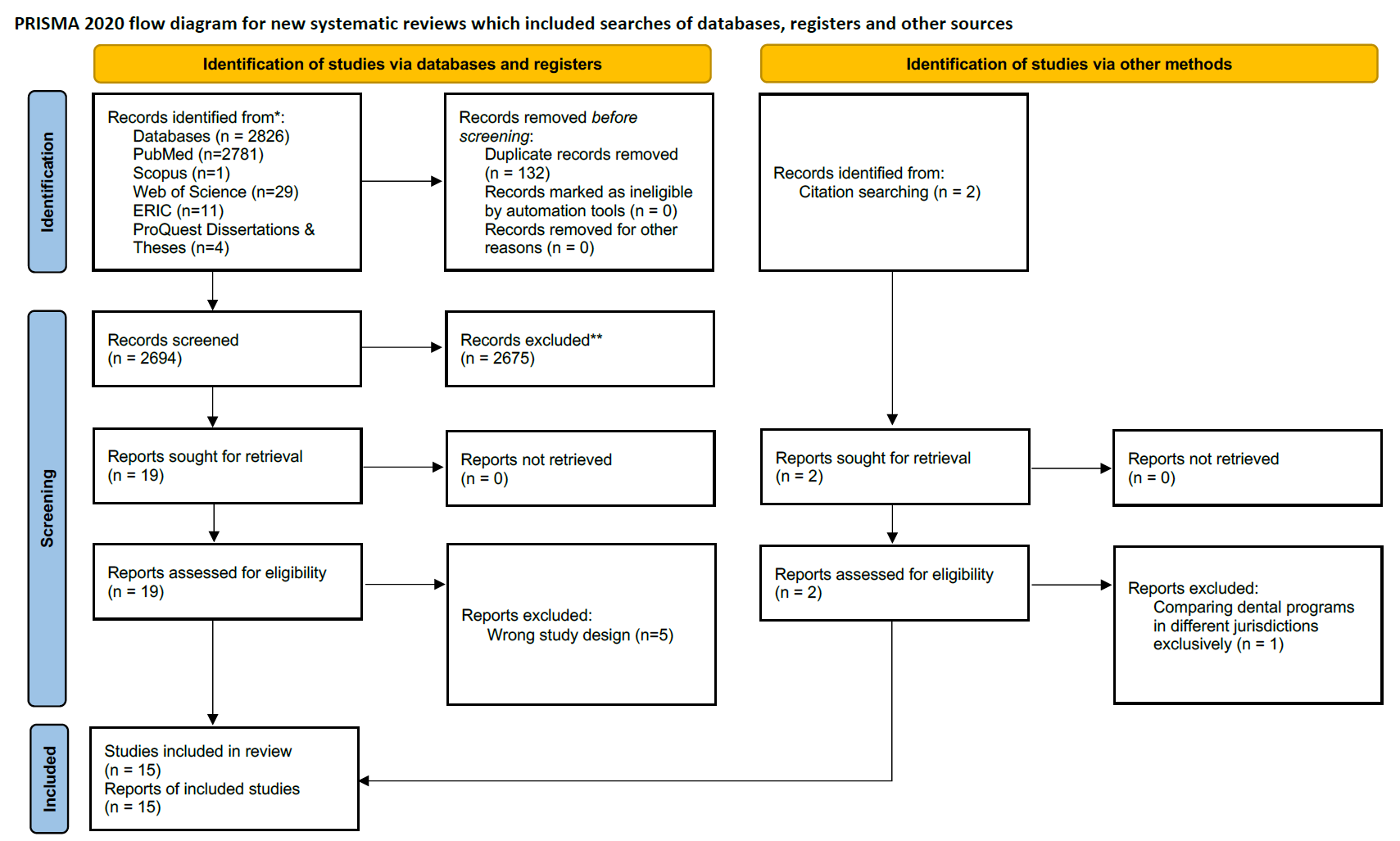
A total of 2826 records were identified, and initial screening of titles and abstracts yielded 21 potentially eligible papers. Following full-text review, 6 of these papers (5 prospective studies and 1 article that compared dental programs in different jurisdictions) were excluded. Therefore, 15 papers were included in this scoping review. Figure 1 details the selection process.
Figure 1: PRISMA flowchart of search strategy and results.
*Consider, if feasible to do so, reporting the number of records identified from each database or register searched (rather than the total number across all databases/registers).
**If automation tools were used, indicate how many records were excluded by a human and how many were excluded by automation tools.
Source: Page MJ, et al. BMJ 2021;372:n71. doi: 10.1136/bmj.n71.
This work is licensed under CC BY 4.0. To view a copy of this license, visit https://creativecommons.org/licenses/by/4.0/
Characteristics of studies
All of the studies originated from North America, with 14 studies (93%) conducted in the United States and one (7%) in Canada. The studies were published between 1973 and 2018.
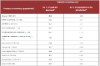
The selected studies comprised 2 reviews and 13 primary studies.2,5-7,10-14,17-22 The review studies consisted of one systematic review13 and one literature review.14 Twelve of the primary research studies employed a quantitative approach,2,5-7,17-22 whereas one used a qualitative approach.21 Most of the primary research studies did not report the methodology applied, although it may be inferred that most of these studies had a cross-sectional design. The 3 studies that did report their respective research methodologies were an overview, a descriptive study and a program evaluation.5-7,12 Table 3 summarizes the main characteristics of the included studies, Table 4 presents the specific characteristics of the review articles, and Table 5 presents information about the primary research studies.
The included studies provided information related to program and student characteristics, challenges and barriers experienced by ITDs, and the performance and perceptions of these dental professionals.
|
Characteristic |
No. of studies |
|---|---|
| Type of article | |
| Review | 2 |
| Quantitative study | 13 |
| Country of program | |
| United States | 10 |
| Canada | 5 |
| Main focus of study | |
| Predictors | 6 |
| Students’ perceptions | 2 |
| Size and population | 2 |
| Challenges and barriers | 4 |
| Opportunities | 2 |
| Program information | 6 |
|
Author, year, country |
Objective |
Licensing pathway |
Challenges or barriers identified |
Contribution of ITDs |
Potential future career |
|---|---|---|---|---|---|
|
Note: NA = not applicable, NBDE = National Board Dental Examination. |
|||||
| Kellesarian (2018),13 USA | To determine challenges | Eligible for licensing examination after program | Admission process, tuition cost, immigration issues, cultural issues | Diversity, experience, expertise | Academic dentistry, clinical dentistry |
| Pannu et al. (2013),14 USA | To determine barriers | Eligible for licensure following NBDE II and completion of program | Further research needed to know barriers | High level of technical skills, knowledge, English-language proficiency, past clinical experience | N/A |
Table 5: Summary of findings of primary research studies included in scoping review (n = 13)a
 Full size table ❯
Program characteristics
Three quantitative studies described program characteristics, including program names, durations, costs, levels of instruction, student numbers, admission requirements and program sizes.6,20,21 Although the programs had slightly different names, terms that commonly appeared in program names included “international dentists,” “advanced placement” and “qualifying.” The duration of programs in this group ranged from 2 to 6 years.6,13
Only 2 studies detailed the content of the programs described. Both studies described 2-year programs in which students were integrated into the regular stream of third- and fourth-year dental curricula, and completed special summer courses designed to upgrade their clinical skills.10,17
One review study detailed the various pathways available for dental licensure, including advanced standing programs, specialty training programs and advanced postgraduate programs.13 Tuition for qualifying programs varied depending on program type and country (United States or Canada),19 but was generally higher for US programs than for Canadian ones. Admission requirements included English-language proficiency tests (e.g., test of English as a foreign language [TOEFL], International English Language Testing System, Michigan English Language Assessment Battery), board examinations (National Board Dental Examinations [NBDE I and NBDE II], NDEB I),8,9,20 prior learning assessments, faculty interviews, academic achievements, dexterity tests, clinical training, transcripts, CVs, recommendation letters and bench tests.
Student characteristics
One study reported that ITDs had more advanced education than domestic students.2 Another study reported that 25.8% of ITDs were from India, 11% from the Philippines and 5.8% from Colombia, while 9 other countries contributed to the remaining 57.4%.20 A third study indicated a consistent increase in proportional ITD enrolment over a 10-year period, growing over the decade from 5% to 7% of those in undergraduate programs and from 20% to 25% of those in graduate programs.6
Challenges and barriers
One quantitative study and 2 reviews highlighted the challenges faced by ITDs during their programs.13,14,22 Notable findings included academic challenges such as language barriers, lower academic performance (specifically lower grade point average), the competitive nature of the admission process exacerbated by the limited number of seats available, the substantial tuition disparities between domestic and international students, and stringent immigration processes.14,22 Financial constraints emerged as a substantial challenge, with ITDs facing lower stipends, elevated tuition fees and pronounced discrepancies in expenses relative to domestic students.13
Performance of ITDs
Various studies reported on the predictive, comparative and perceived performance of ITDs. Five primary research studies used a quantitative approach to predict ITDs’ academic performance.7,11,18,19,22 Only one of these studies explored the methods of performance evaluation adopted during the program, reporting on the use of grades and competency assessments to explore clinical performance.11
Examinations such as the NDEB (in Canada) and the NBDE (in the United States) were strong predictors of academic achievement during dental qualifying programs.7,11,19,22 Scores on English-language proficiency tests, including the TOEFL, were also significant predictors of academic success in 3 studies.11,18,22 One study highlighted the association of TOEFL scores with clinical grades, underlining the importance of effective communication with faculty and patients.11 That study also found that operative and fixed technique tests and interviews were weaker predictors. These findings were consistent with those of another study identifying NBDE I and TOEFL as the strongest predictors and laboratory tests and interviews as the weakest predictors of ITDs’ overall performance.22 Two studies found TOEFL and dexterity tests to be the strongest predictors of academic and clinical performance.18,19 An earlier study7 reported slightly different findings, suggesting that English-language test results were not a significant predictor of performance. In contrast, the NBDE I and the American Dental Association Science Achievement test emerged in that study as the strongest performance predictors.7 NBDE II and dexterity tests were also reported as the most significant predictors for academic and clinical success among ITDs, with TOEFL scores and interviews being the weakest predictors.7
Two studies compared the performance of international and domestic students on licensure exams. One reported no significant difference between the groups.2 The other reported that domestic students outperformed international students in terms of final grades, whereas the groups’ performance was similar in the Objective Structured Clinical Examination.13 None of the studies included in this scoping review explored graduation rates among ITD students.
Perceptions of ITDs
One study reported that students generally felt included within the school community and expressed confidence in their ability to seek assistance within the program.5 Additionally, the students emphasized the role of proper teaching assistance, particularly in clinical settings, in reducing anxiety among ITDs and improving their performance. Such assistance helped ITDs to acquire “foreign” clinical skills more quickly. Another study indicated that students perceived enhancement of their skills in oral medicine and treatment planning, informed consent, ethics, record keeping and regulated dentistry.10 The participants in this study reported no change in knowledge or skill level in orthodontics, pediatric dentistry, operative dentistry, fixed and removable prosthodontics, or critical appraisal of the literature.14
Discussion
In this scoping review, we have summarized the existing literature on ITDs enrolled in qualifying programs, providing a detailed overview of key features and identifying research gaps. Many studies have described the significant challenges that ITDs face, including language barriers, cultural differences, social integration issues, immigration hurdles and financial difficulties. Language proficiency and cultural adaptation were found to be major predictors of success in qualifying programs, with higher language proficiency scores being strongly associated with better academic and clinical outcomes.23 Social integration and financial stability have also been linked to improved academic performance, which highlights the importance of the availability of support systems.
Many of the studies included in our review highlighted various characteristics of qualifying programs for ITDs, such as program structure, student demographic characteristics and tuition costs. The financial burden on ITDs, who must pay higher tuition fees than domestic students, underscores a significant barrier that has been documented but not thoroughly analyzed in prior research. A detailed understanding of this factor would contribute to a more comprehensive overview of ITDs’ challenges and highlights areas for potential policy interventions.
Several studies included in this review consistently found that English proficiency predicted academic success among ITDs.24 Similar associations between English proficiency and academic performance have been reported among nursing students, reinforcing the robustness of this relationship in health science educational settings.25 Ultimately, these findings indicate that proficiency in English as a second language plays a pivotal role in academic achievement across different academic programs and student cohorts.26
Furthermore, board examination results, specifically results for the NBDE, have been highlighted as significant predictors of performance among dental graduates. In particular, success in these exams correlates with better academic outcomes among dental students.3 Similarly, in medical education, the results of specific board examinations, such as the American Board of Surgery qualifying and certification examinations, have been shown to correlate positively with academic outcomes among surgical residents.26 By examining these correlations in the dental and medical education contexts, we can deepen our understanding of how performance on standardized examinations influences broader academic outcomes in health care training programs.27 This linkage emphasizes the consistent predictive value of board examination results in shaping academic achievement and their significance as a measurable indicator of professional competence.26
This review delved into the challenges and barriers encountered by ITDs. Along with higher tuition costs and language disparities, the competitive admission process and the sociocultural adjustments faced by ITDs highlight the intricate integration challenges within qualifying degree programs.27 Echoing our findings, a study on international medical graduates shed light on similar challenges, including social, cultural and language barriers.28 These results underscore the generalizability of these obstacles across different health care professions.
Recognizing the challenges faced by ITDs illuminates the need for targeted support mechanisms to enhance their learning experiences. Recommendations relevant to international medical graduates set out by Webster and colleagues29 included developing targeted cultural competency training, developing training programs for intercultural communication skills and creating opportunities for cultural immersion experiences (clinic rotations). This measure could be equally beneficial for ITDs.
This scoping review had both strengths and limitations. The analysis covered a broad scope of the literature on ITDs enrolled in qualifying dental programs, highlighting various challenges and potential solutions. Conversely, the fact that all studies were conducted in North America limits the generalizability of findings to other regions. Reports published in languages other than English were excluded because of limited resources, but this also limits global applicability of our findings. Moreover, most studies lacked transparency in describing their methods, failed to adjust for key confounders (e.g., prior clinical experience, socioeconomic status) and relied on convenience samples. These factors introduce selection bias, may lead to overstatement of the impact of predictors (such as TOEFL scores) and could lead to underrepresentation of certain ITD subgroups.
Future research should draw on studies from diverse regions and could incorporate qualitative or mixed-methods approaches to capture the personal and social dimensions of ITDs’ experiences, as well as establishing clear sample size and recruitment protocols. Longitudinal research is needed to track ITDs’ progress from enrolment to postgraduate situations, which would contribute to clarifying the programs’ impact on long-term practice. Finally, testing targeted interventions to address the common challenges faced by ITDs—such as language barriers, cultural disparities and financial constraints—could lead to more effective support systems within qualifying dental programs.
Conclusion
Although ITDs face significant challenges, such as language barriers, financial constraints and cultural adjustments, they also demonstrate strong academic performance, particularly when supported by robust admission criteria and educational frameworks. The findings of this scoping review underscore the need for dental educators, policymakers and researchers to address these challenges while leveraging the strengths of ITDs to enhance their integration and success in qualifying programs.
THE AUTHORS
 |
Ms. Midha was, at the time of this study, an MSc student in the Mike Petryk school of dentistry, University of Alberta, Edmonton, Alberta. |
 |
Dr. Zalawadia was, at the time of this study, a DDS student in the Mike Petryk school of dentistry, University of Alberta, Edmonton, Alberta |
 |
Dr. Capenakas is term clinical assistant professor in the Mike Petryk school of dentistry, University of Alberta, Edmonton, Alberta |
 |
Dr. Fernandes Fagundes is research assistant in the Mike Petryk school of dentistry, University of Alberta, Edmonton, Alberta |
 |
Dr. Berlin-Broner is associate professor in the Mike Petryk school of dentistry, University of Alberta, Edmonton, Alberta |
 |
Dr. Perez Garcia is assistant clinical professor in the Mike Petryk school of dentistry, University of Alberta, Edmonton, Alberta |
 |
Dr. Amin is professor and associate chair in the Mike Petryk school of dentistry, University of Alberta Edmonton, Alberta, and Alberta Dental Association clinical dentistry research chair. |
Corresponding author: Dr. Maryam Amin, Mike Petryk School of Dentistry, Faculty of Medicine and Dentistry, College of Health Sciences, University of Alberta, 5-513 Edmonton Clinic Health Academy, 11405 – 87 Avenue NW, Edmonton, AB, T6G 1C9. Email: maryam.amin@ualberta.ca.
Funding
This study was funded by the Mike Petryk School of Dentistry Education Research Fund (University of Alberta, Edmonton, AB), under grant SDERF 2022-03.
The authors have no declared financial interests.
This article has been peer reviewed.
References
- Farronato M, Boccalari E, Del Rosso E, Lanteri V, Mulder R, Maspero C. A scoping review of respirator literature and a survey among dental professionals. Int J Environ Res Public Health. 2020;17(16):5968. doi: 10.3390/ijerph17165968
- Al-Sowygh ZH, Sukotjo C. Foreign-trained dentists in advanced education in prosthodontics programs in the United States: Demographics, perspectives on current training, and future goals. J Prosthodont. 2011;20(2):161-5. doi: 10.1111/j.1532-849X.2010.00658.x
- Morch CM, Atsu S, Cai W, Li X, Madathil SA, Liu X, et al. Artificial intelligence and ethics in dentistry: A scoping review. J Dent Res. 2021;100(13):1452-60. doi: 10.1177/00220345211013808
- Arksey H, O’Malley L. Scoping studies: Towards a methodological framework. Int J Social Res Methodol. 2005;8(1):19-32. doi: 10.1080/1364557032000119616
- Berthold P, Lopez N. PENN PASS: A program for graduates of foreign dental schools. J Dent Educ. 1994;58(11-12):849-54. PMID: 7798405.
- Boorberg NB, Schonwetter DJ, Swain VL. Advanced placement, qualifying, and degree completion programs for internationally trained dentists in Canada and the United States: An overview. J Dent Educ. 2009;73(3):399-415. doi: 10.1002/j.0022-0337.2009.73.3.tb04712.x
- Browder HC, Wilcox S, Martinoff JT. Foreign dental graduates: Admission criteria and predicted success in an American dental school. J Dent Educ. 1980;44(10):580-4. doi: 10.1002/j.0022-0337.1980.44.10.tb01405.x
- Qualifying and degree completion programs. Ottawa (ON): National Dental Examining Board of Canada. Available: https://ndeb-bned.ca/equivalency-process/qualifying-and-degree-completion-programs/ (accessed 2025 Jan 2).
- ADEA CAAPID® programs. Washington (DC): American Dental Education Association. Available: https://programs.adea.org/CAAPID/programs (accessed 2025 Jan 2).
- Kogon S, Banting DW, Sandhu H. Foreign-trained dentists’ perceived knowledge and skills after graduation from a structured two-year program. J Dent Educ. 2011;75(8):1098-106. doi: 0.1002/j.0022-0337.2011.75.8.tb05155.x
- Pitigoi-Aron G, King PA, Chambers DW. Predictors of academic performance for applicants to an international dental studies program in the United States. J Dent Educ. 2011;75(12):1577-82. doi: 10.1002/j.0022-0337.2011.75.12.tb05217.x
- Rice CD, Tira DE, Alton G, Krantz S. The enrollment and support of international students at United Stated dental schools. Int Educ. 2003;33(1): 51-68.
- Kellesarian SV. Foreign-trained dentists in the United States: Challenges and opportunities. Dent J (Basel). 2018;6(3):26. doi: 10.3390/dj6030026
- Pannu V, Thompson AL, Pannu DS, Collins MA. Education for foreign-trained dentists in the United States: Currently available findings and need for further research. J Dent Educ. 2013;77(11):1521-4. doi: 10.1002/j.0022-0337.2013.77.11.tb05629.x
- Tricco AC, Lillie E, Zarin W, O’Brien KK, Colquhoun H, Levac D, et al. PRISMA extension for scoping reviews (PRISMA-ScR): Checklist and explanation. Ann Intern Med. 2018;169(7):467-73. doi: 10.7326/M18-0850
- Ouzzani M, Hammady H, Fedorowicz Z, Elmagarmid A. Rayyan—a web and mobile app for systematic reviews. Syst Rev. 2016;5:210. doi: 10.1186/s13643-016-0384-4
- Kogon S, Banting DW, Sandhu H. Graduating grades and National Dental Examination results of foreign-trained and domestic dental students. J Dent Educ. 2012;76(9):1200-5. doi: 10.1002/j.0022-0337.2012.76.9.tb05375.x
- Simon J, King P, Chambers D. Admissions test predictors of performance in a foreign-trained dentist program. J Dent Educ. 1997;61(5):440-3. PMID: 9193449.
- Stacey DG, Whittaker JM. Predicting academic performance and clinical competency for international dental students: Seeking the most efficient and effective measures. J Dent Educ. 2005;69(2):270-80. doi: 10.1002/j.0022-0337.2005.69.2.tb03913.x
- Sweis LE, Guay AH. Foreign-trained dentists licensed in the United States: Exploring their origins. J Am Dent Assoc. 2007;138(2):219-24. doi: 10.14219/jada.archive.2007.0140
- Hausmann E. DDS degree program for foreign dentists. J Dent Educ 1973;37(5):19-25. doi: 10.1002/j.0022-0337.1973.37.5.tb00683.x
- Itaya LE, Chambers DW, King PA. Analyzing the influence of admissions criteria and cultural norms on success in an international dental studies program. J Dent Educ. 2008;72(3):317-28. doi: 10.1002/j.0022-0337.2008.72.3.tb04498.x
- Winterer ER, Froyd JE, Borrego M, Martin JP, Foster M. Factors influencing the academic success of Latinx students matriculating at 2-year and transferring to 4-year US institutions—implications for STEM majors: a systematic review of the literature. International Journal of STEM Education. 2020;7(1):34. doi: 10.1186/s40594-020-00215-6
- Walton-Roberts M. Occupational (im)mobility in the global care economy: The case of foreign-trained nurses in the Canadian context. J Ethnic Migr Stud. 2020;46(16):3441-56. doi: 10.1080/1369183X.2019.1592397
- Salamonson Y, Everett B, Koch J, Andrew S, Davidson PM. English-language acculturation predicts academic performance in nursing students who speak English as a second language. Res Nurs Health. 2008;31(1):86-94. doi: 10.1002/nur.20224
- de Virgilio C, Yaghoubian A, Kaji A, Collins JC, Deveney K, Dolich M, et al. Predicting performance on the American Board of Surgery qualifying and certifying examinations: A multi-institutional study. Arch Surg. 2010;145(9):852-6. doi: 10.1001/archsurg.2010.177
- Ahern S, Woods N, Kalmus O, Birch S, Listl S. Needs-based planning for the oral health workforce - development and application of a simulation model. Hum Resour Health. 2019;17:55. doi: 10.1186/s12960-019-0394-0
- Steinberg EM, Valenzuela-Araujo D, Zickafoose JS, Kieffer E, DeCamp LR. The “battle” of managing language barriers in health care. Clin Pediatr (Phila). 2016;55(14):1318-27. doi: 10.1177/0009922816629760
- Webster F, Krueger P, MacDonald H, Archibald D, Telner D, Bytautas J, et al. A scoping review of medical education research in family medicine. BMC Med Educ. 2015;15:79. doi: 10.1186/s12909-015-0350-1